Quivara™ (NRNT-012302) for Treatment-Resistant Depression
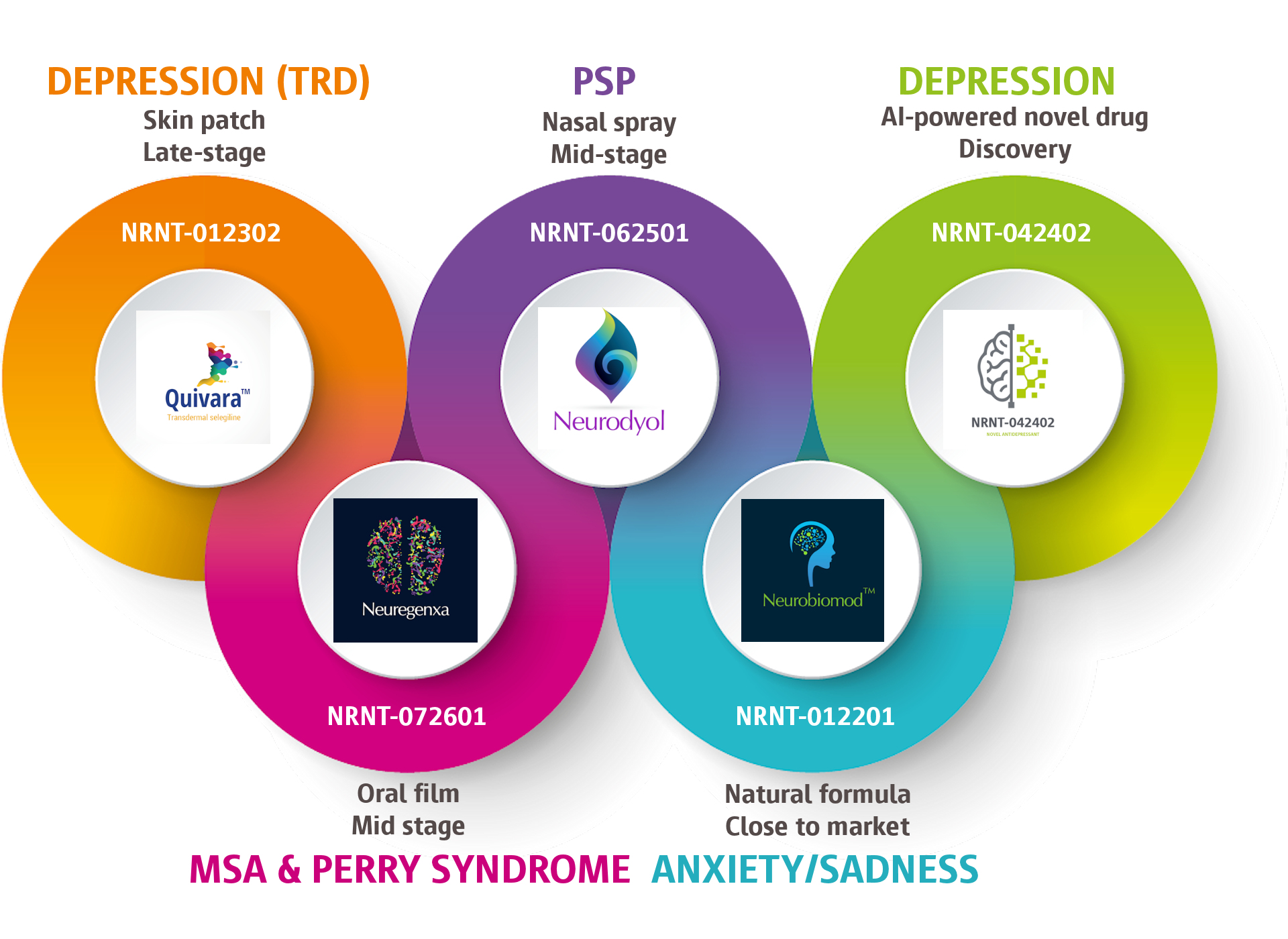
Quivara™ is our most advanced programme and is being prepared for a Phase III clinical trial in treatment-resistant depression. The product is a transdermal patch that delivers a well-characterised antidepressant through the skin, bypassing the digestive system and reducing the dietary restrictions historically associated with this class of medicine. The patch works by increasing levels of three important brain chemicals (dopamine, norepinephrine, and serotonin), providing a broad-spectrum antidepressant effect that may be particularly beneficial for patients who have not responded to conventional treatments.
NRNT-062501 for Progressive Supranuclear Palsy
NRNT-062501 is being developed for the treatment of progressive supranuclear palsy, a rare and rapidly progressive neurodegenerative disease characterised by severe motor impairment, difficulties with speech and swallowing, and cognitive decline. There are currently no approved disease-modifying therapies for this condition, and the median survival from onset of symptoms is typically six to ten years.
The company's approach has been designed with the specific clinical challenges of this patient population in mind, particularly the need for consistent drug delivery in patients who develop progressive difficulty swallowing. The Directors intend to pursue orphan drug designation for this programme, which, if granted, may provide important regulatory incentives including a period of market exclusivity following approval.
NRNT-072601 for Multiple System Atrophy and Perry Syndrome
NRNT-072601 is a second orphan candidate targeting two rare and severe neurological conditions. Multiple system atrophy is a rapidly progressive disorder affecting the autonomic nervous system and motor control, leading to profound disability. Perry syndrome is an ultra-rare condition characterised by parkinsonism, severe depression, and life-threatening respiratory failure, for which no approved treatments currently exist.
NRNT-072601 is been developed as a sublingual film formulation designed to provide reliable drug delivery and symptomatic relief across both motor and non-motor symptoms. The Directors believe that both conditions qualify for orphan drug designation and that the absence of existing treatments represents a significant clinical and commercial opportunity.
Neurobiomod™ (NRNT-012201) for Mild Depression and Anxiety
Neurobiomod™ is a proprietary formulation of naturally derived compounds and essential nutrients, designed for the management of mild depression and anxiety. The formulation is based on a defined combination of bioactive ingredients that have been the subject of published clinical studies comparing their effects against conventional antidepressants. The precise composition is maintained as a trade secret.
The company believes Neurobiomod offers the potential for earlier revenue generation compared to the company's clinical-stage programmes, while also establishing the company's presence in the broader mental health market.
NRNT-042402 for Depression (AI-Driven Drug Discovery)
In collaboration with Netellis LLC, a specialist in computational drug design, Neurentis is developing NRNT-042402, a programme aimed at identifying and optimising a novel antidepressant using artificial intelligence methodologies. The programme uses advanced computational models to screen large libraries of potential compounds and predict their likely pharmacological behaviour, with the objective of accelerating the early stages of drug discovery while reducing costs. This longer-term initiative complements the company's nearer-term clinical programmes.